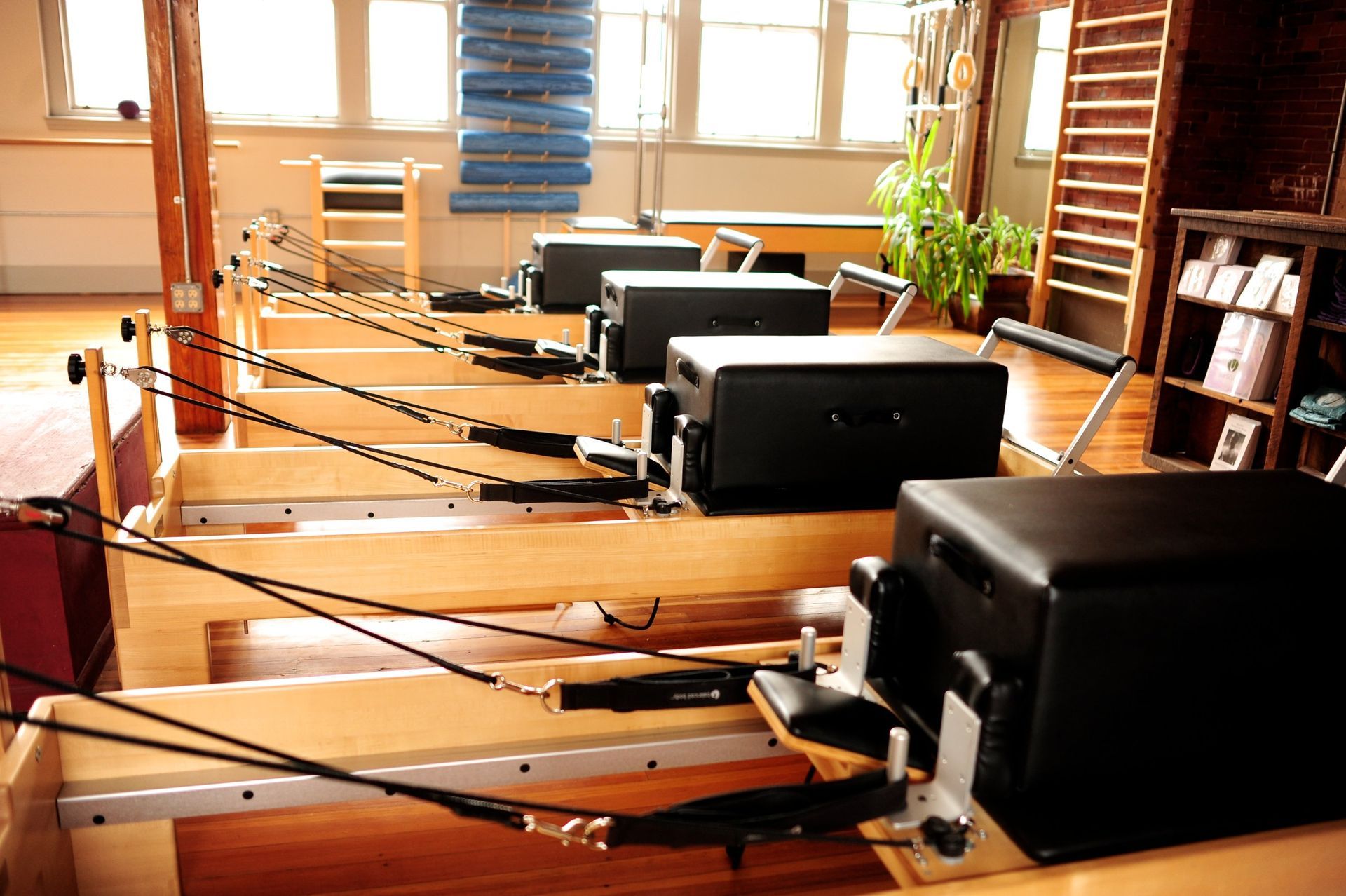
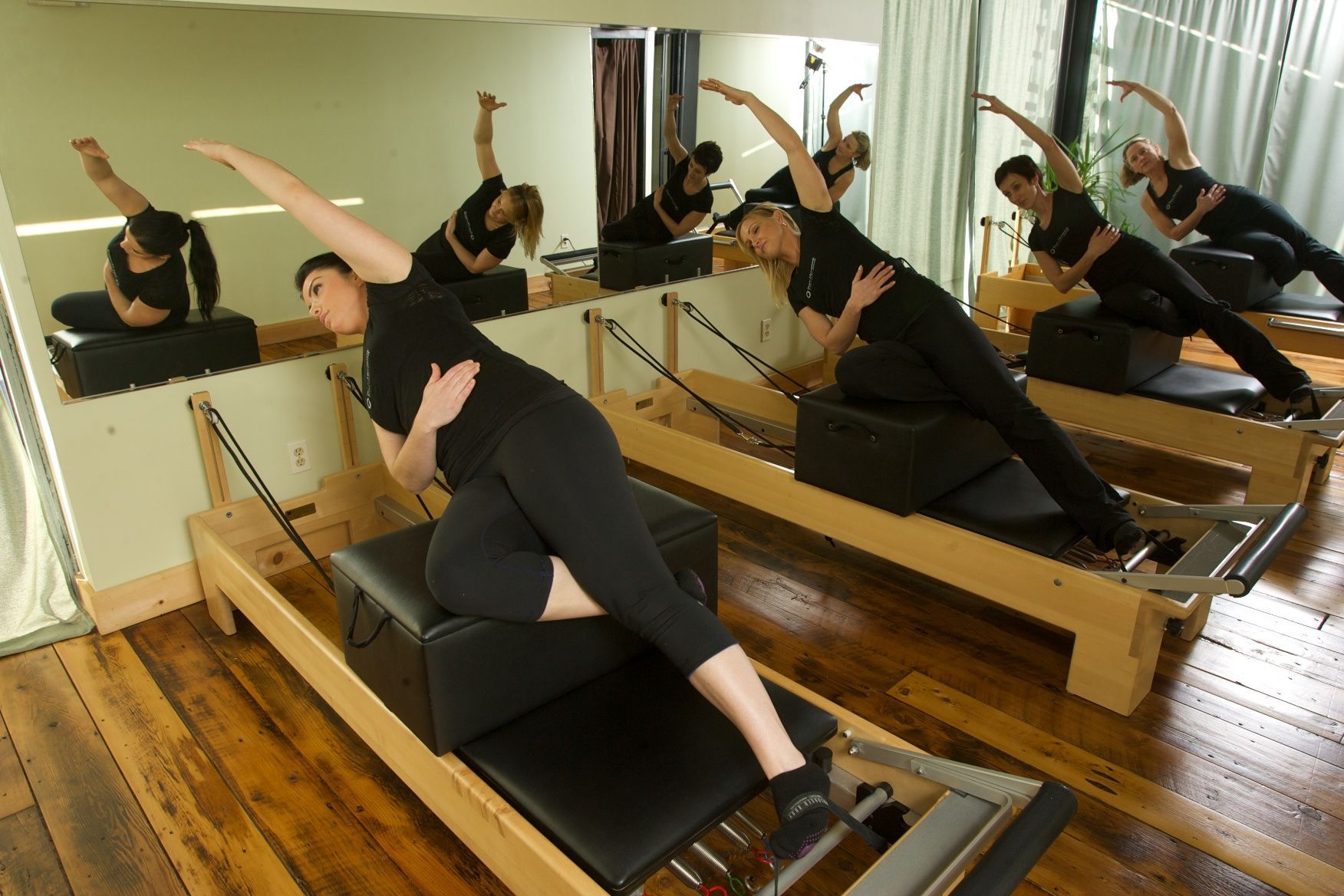
The Pilates Reformer is a versatile piece of apparatus designed to create resistance and support through a moving carriage, springs, and adjustable components such as the footbar, headrest, ropes, and straps. While the purpose of the Reformer remains the same across all brands—to provide a platform for full-body strength, flexibility, alignment, and control—the details of construction can vary. These variations may influence exercise setup, range of motion, and cueing. As a teacher, understanding the equipment in front of you is essential for safety, consistency, and client success.
General Principles
Regardless of manufacturer, Reformers share core characteristics:
- A carriage that rolls smoothly along tracks within the frame.
- Springs that offer progressive resistance rather than fixed weight.
- A footbar to serve as a stable base for hands or feet.
- Shoulder blocks and headrest to provide reference points and stability.
- Ropes or leather straps connected to pulleys for arm and leg work.
These common elements allow the same repertoire of exercises to be taught across brands. However,
differences in design will affect how each movement feels and how you, as the instructor, may need to cue or adapt.
Brand Differences
Gratz
- Heritage design, closely aligned with Joseph Pilates’ original equipment.
- Features a
heavier carriage and
shorter travel distance, making exercises feel more contained and precise.
- Springs are
stiffer and engage quickly, requiring strong initiation from the body.
- Leather straps (often non-adjustable) and fixed gear settings reinforce classical alignment and demand control.
Balanced Body
- Known for
versatility and adaptability; popular in contemporary and rehab settings.
- Offers
longer travel on the carriage, giving greater range for stretches and athletic clients.
- Multiple
footbar positions, headrest angles, and adjustable ropes allow for customization.
- Springs are
lighter and more progressive, creating smoother resistance curves.
Merrithew (Stott Pilates)
- Designed for the
contemporary Stott repertoire with emphasis on biomechanics and modifications.
- Features
gearbar positions that can finely adjust tension, and
retractable rope systems with precise length settings.
- Carriage is
mid-weight with a smooth glide, supporting both flowing sequences and detailed adjustments.
- Footbar and headrest often have more incremental options for setup.
Peak Pilates
- Offers a
blend of classical and contemporary features.
- Carriages tend to be
lighter than Gratz but less adjustable than Balanced Body.
- Straps are often
nylon with adjustable loops, making transitions quicker.
- Known for sturdy build but fewer customization points compared to Balanced Body or Merrithew.
Why Instructions May Differ
Because the feel of the Reformer depends on the design, your cues and expectations may need to shift:
- Spring tension varies—what feels like a “medium” spring on one brand may feel light or heavy on another.
- Carriage travel can influence how deeply a client stretches or how much stability they need to maintain.
- Footbar positions and
strap lengths change the angle of force, affecting joint alignment and muscle recruitment.
- Materials (leather vs. nylon straps, heavier vs. lighter carriage) alter how quickly the carriage responds to effort.
As a teacher, your goal is to apply the
movement principles consistently while adjusting the
setup, cues, and expectations to suit the equipment in front of you. Always test the Reformer yourself before teaching on a new model, and be clear with clients that small differences in feel are normal.