How to make exercise a habit - even if you hate it.

Leslie Guerin • May 26, 2025

Discover the secret to staying consistent and why becoming certified—just for yourself—might be your best motivation yet.

We’ve all been there:
You know you should exercise.
You want to want to exercise.
But if you’re honest, you… well…
kinda hate it.

Or maybe it’s not hate exactly—maybe it’s dread, or boredom, or that nagging voice saying, “I’m just not athletic.”

Here’s the thing: you don’t have to love exercise to make it a habit.
You just have to keep showing up—
especially when you don’t feel like it.

And yes, that’s possible—even for you.

Why Exercise Feels So Hard

Let’s be real: there are a lot of reasons exercise feels hard to start, let alone stick with.
👉 We’re busy.
👉 It’s uncomfortable.
👉 It’s confusing (what should I even do?).
👉 We’d rather do… well, just about anything else.

And there’s also a cultural myth that exercise has to be perfect to count:

  • The longest workout
  • The most intense class
  • The perfect outfit or setting

But here’s the truth: exercise doesn’t have to be perfect—it just has to be done.

The secret? Making it a habit.
And here’s how you can do it—no love for exercise required.

1️⃣ Start Small—Smaller Than You Think

When you’re trying to start a new habit, your brain will resist anything that feels too big.
That’s why “I’m going to work out for an hour every day!” usually crashes and burns.

Instead, try this:

  • Do five minutes of gentle stretching.
  • Take a brisk walk around the block.
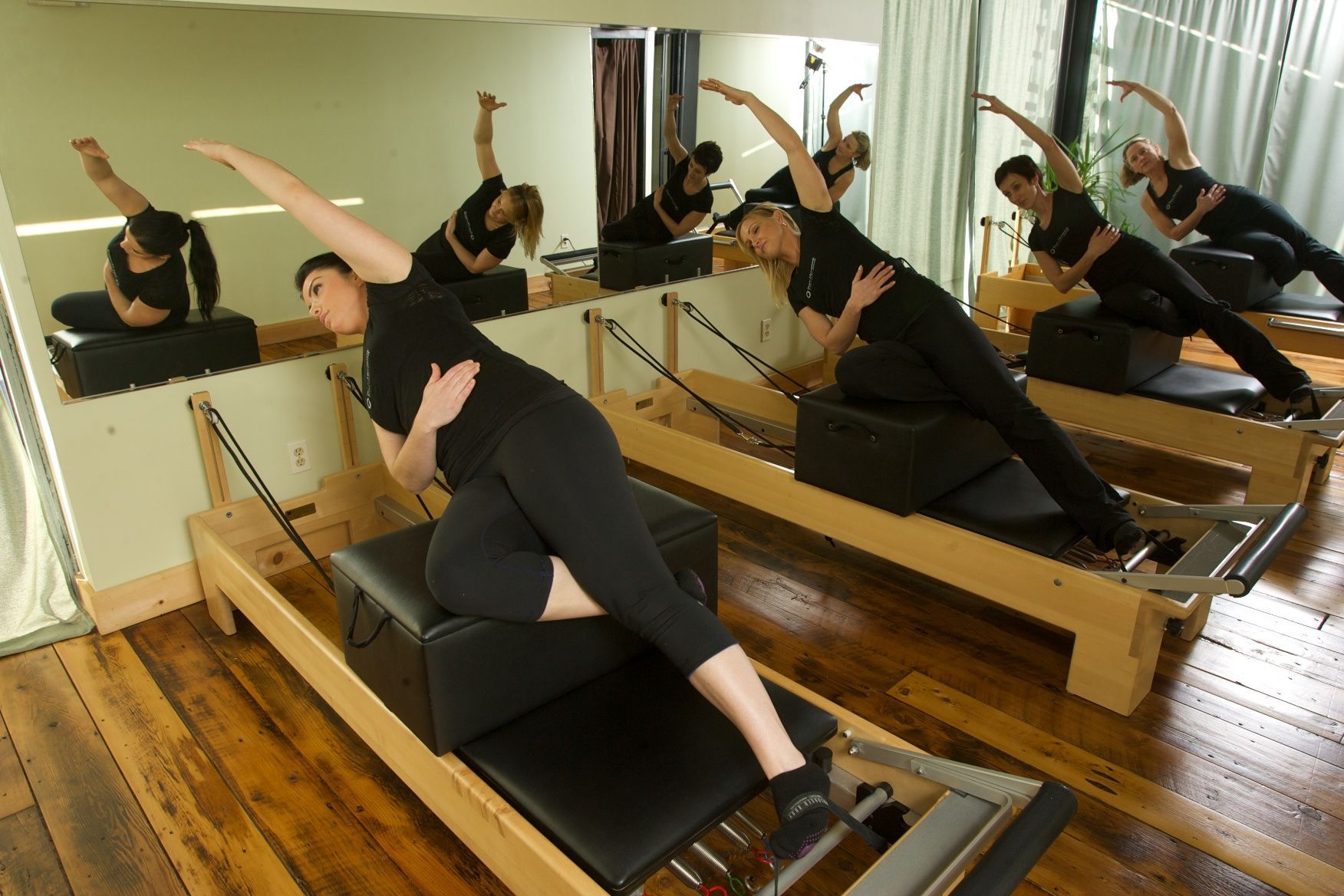
  • Do 10 reps of a single Barre or Pilates move.

It’s not about getting a perfect workout—it’s about getting moving at all.

2️⃣ Find What You Don’t Hate

Maybe you’ve always been told to run, but you hate running.
Maybe you feel silly in the weight room, or lost in a cardio class.

But what if you just haven’t found your movement yet?

Barre and Pilates, for example, combine:
Full-body movement
Graceful, flowing transitions
Gentle but deep strength
Mind-body focus

They’re low-impact (great for injuries or chronic pain), and they’re designed to be adaptable—no matter your level or mood.

So before you write off exercise entirely, try a few different styles—you might be surprised by what sticks!

3️⃣ Link It to Something You Already Do

One of the most powerful tools in habit-building is habit stacking—attaching your new habit to something you already do.

  • Morning coffee? Spend 5 minutes doing Pilates mat work.
  • Brushing your teeth? Do 10 squats or a quick standing barre series.
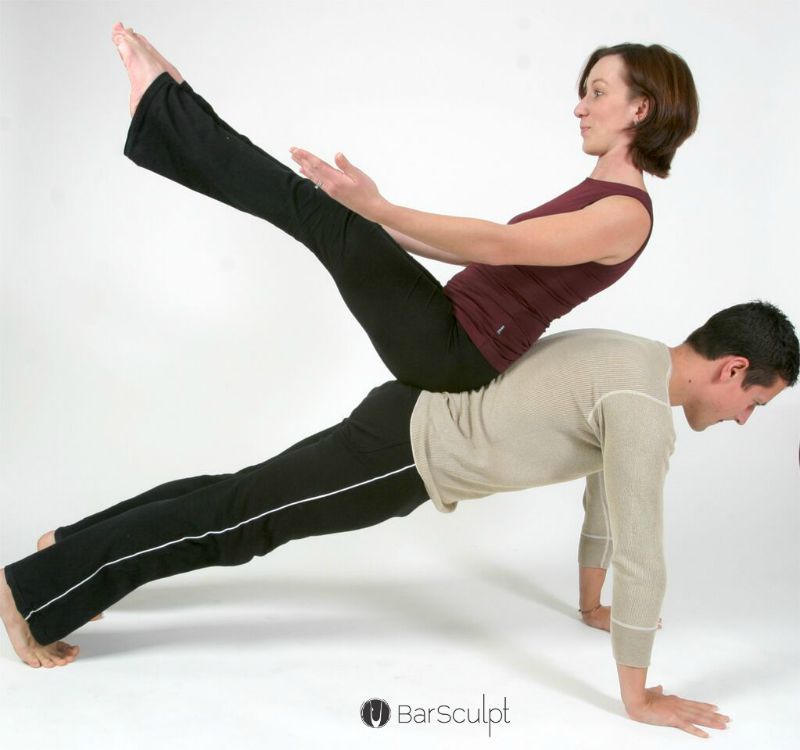
  • Scrolling Instagram? Put your phone down and do a 2-minute plank challenge.

The easier you make it to remember and do the movement, the less resistance you’ll feel.

4️⃣ Make It Social (or at Least Accountable)

Accountability is huge when you’re trying to make exercise a habit.
That’s why people love group classes—
even if they’re online.

  • Tell a friend what you’re trying to do.
  • Join a challenge (like doing 50 classes in 99 days—more on that in a bit!).
  • Sign up for a certification program, even if you never plan to teach—more on that in a minute, too!

When someone else knows your goal, you’re more likely to show up—and showing up is what builds the habit.

5️⃣ Reframe the Goal

Sometimes, exercise feels like punishment—like you’re only doing it to lose weight or “fix” yourself.

But what if you shifted the focus?
✅ Move to
feel good—not to look a certain way.
✅ Move to
learn—to get curious about how your body works.
✅ Move to
take care of yourself—because you deserve to feel strong, capable, and alive.

What If You… Still Hate It?

Here’s the truth:
You don’t have to love every minute of exercise.
But you might learn to love what it
does for you:
💜 The energy.
💜 The focus.
💜 The sense of accomplishment.

And the more you move—even in small ways—the more you’ll see those benefits add up.

Why Certification Can Help—Even If You Never Want to Teach

You might be wondering:
“Why would I get certified in Barre or Mat Pilates if I don’t want to be a teacher?”

Here’s why:
Accountability—having a structured program keeps you consistent.
Deeper knowledge—you’ll understand the why behind every move.
Pride—there’s something powerful about finishing a program and knowing: I did that.
Personal growth—you’ll see your own progress in ways you never would in a drop-in class.

Even if you never teach a day in your life, these programs are about you—your body, your mind, and your ability to commit to something meaningful.

Memorial Day Sale: Your Summer of Certification Starts Here

Ready for a nudge?
This
Memorial Day, I’m offering a special sale on my Mat Pilates and Barre Teacher Trainings:

🌟 Regular Price: $499
🌟
Sale Price: $200 (That’s $299 off!)
🌟
Sale Ends: Sunday, June 1st at midnight

That’s right—you can spend your summer becoming certified in Barre or Mat Pilates for just $200.

And you’ll have unlimited access to the materials, so you can learn at your own pace—even if your summer is full of travel or beach days.

99 Days of Summer, 50 Classes—Can You Do It?

Summer is about more than sun and BBQs—it’s a perfect time to build a habit that will last long after Labor Day.

That’s why I’m challenging you:
💪
50 classes in 99 days—that’s roughly 3 workouts a week.

It’s totally doable—especially with my on-demand library and certification programs to guide you.

And just imagine how you’ll feel at the end of summer:
✅ Stronger.
✅ More focused.
✅ Proud of what you built.

How BarSculpt Can Help

I created BarSculpt to help you make movement a habit—even if you’re brand new or coming back after a long break.

With my on-demand library, live virtual classes, and self-paced certifications, you’ll get:
💜
Variety—Barre, Pilates, and more
💜
Community—cheering you on from wherever you are
💜
Expert guidance—because I know what it’s like to start from zero

Your Summer of Movement Starts Now

Here’s what I want you to remember:
You don’t have to love exercise to make it part of your life.
You just have to start.
And then, keep going—even if it’s just a little bit at a time.

So:
👉
Try a 5-minute workout today—just to see how it feels.
👉
Consider a certification program—not to teach, but to learn.
👉
Join the summer challenge—because you’ll feel amazing at the finish line.

💜 Ready to Move? 💜

Your summer of movement, learning, and transformation starts today.
Let’s make it happen—together.

By Leslie Guerin February 22, 2026
There is a common misunderstanding about Pilates that has grown louder over the years: that it is meant to be gentle, slow, soft and easy. A “nice” workout. But that was never the intention. Pilates was not created to be performative. It was created to be effective. Effectiveness in movement does not come from looking impressive. It comes from precision. Somewhere along the way, the visual of Pilates became louder than the method itself. Long limbs moving with beautiful choreography and endless repetitions. Classes that look like Pilates. But looking like Pilates, being called Pilates and being Pilates are not the same thing. And most people, including many teachers, skip the part that actually makes it work. Pilates Was Never Meant to Be Performative Joseph Pilates did not design a system that rewarded momentum. He designed a system that required attention. Not attention to how something looks, though that is how you can tell if the exercises is executed properly. The attention should ideally be to how something is done. Modern fitness culture thrives on performance. Movement is filmed, shared, and packaged visually. The more dynamic it looks, the more engaging it appears. The more repetitions, the more it seems productive. This is where Barre and Pilates differ. This is where those lines have blurred and I quietly hope Pilates can resists this fad. A well-taught Pilates class may look almost uneventful from the outside. To someone expecting entertainment, it can seem understated. To the nervous system, it is deeply demanding. Because Pilates was never designed to entertain the eye. It was designed to reorganize the body. It is art, but not for arts sake. Precision Requires Attention Precision creates actual change. When movement becomes rushed, the body defaults to habit. Stronger muscles take over. Momentum replaces control. Alignment becomes approximate instead of intentional. Slowing down in Pilates is not about being gentle. It is about being accurate. It allows the brain to register position, and control. It gives the body time to respond instead of react. Precision is not passive. It is neurologically active. Holding a half curl with the neck long, ribs quiet, and breath organized requires far more attention than swinging through ten repetitions with momentum. Performing a leg circle without pelvic movement demands significantly more control than making the circle bigger or faster. The difficulty in Pilates is rarely about load. It is about coordination. Coordination should not be rushed for the sake of getting in more repetitions. Many Classes Look Like Pilates, But Aren’t Being Taught to Bodies This is where the disconnect becomes most visible. Exercises are demonstrated, copied and followed. Social media has taken the see and steal culture to new lengths! This leads to the body in front of the teacher is not being taught properly. Clients are becoming carbon copies of braod movements seen online and just simply being asked to replicate. There is a difference between cueing choreography and teaching movement. When classes focus primarily on what the exercise should look like, participants often compensate without realizing it. The neck grips during abdominal work. The hip flexors dominate leg movements. The lower back absorbs what the abdominals were meant to support. From the outside, everything appears correct. From the inside, the wrong muscles are doing the work. I know this to be true, because I have definitely performed Pilates.. and on an off day... I am sure I will unfortunately do this again. This has allowed me to really see though, that Pilates teaching requires observation. It requires adjusting range of motion, tempo, setup, and intention based on the individual body, not the idealized version of the exercise. Because the goal of Pilates is not uniform movement. It is intelligent movement. Real Pilates Feels Quieter, and More Demanding Neurologically One of the most surprising experiences for clients transitioning from performative classes to precise Pilates is how “quiet” it feels. There is less rushing and far less choreography for the sake of variety. Yet, thes classes often feels more challenging. Not because it is harder in the traditional fitness sense. But because it requires sustained mental engagement. You cannot mentally check out during precise Pilates. You are asked to notice: Where your ribs are How your pelvis is responding Whether your neck is assisting unnecessarily If your breath is supporting or disrupting the movement Which muscles are initiating versus compensating This level of awareness increases the neurological demand significantly. The brain is actively mapping movement rather than passively repeating it. That is why Pilates can feel deceptively demanding even when the exercises appear small or controlled. It is not about exhaustion. It is about organization. Gentle Is Often a Misinterpretation of Control When Pilates is described as gentle, it is usually because it lacks impact, heavy loading, or aggressive pacing. But low impact does not equal low intensity. Holding alignment under control. Moving without compensation and maintaining precision through fatigue. These are not gentle skills. They are refined skills. In fact, when Pilates is taught with true precision, many clients realize they have been overworking the wrong areas for years. Their hip flexors tire quickly. Their neck becomes aware. Their deep abdominals fatigue in ways they never noticed before. Not because the workout is harsher. But because it is finally specific. Specificity feels different than intensity. Why Precision Gets Skipped Skipping precision is rarely intentional. It is often the result of: Large class sizes Fast-paced programming Overemphasis on choreography Teacher insecurity around slowing things down The pressure to make classes feel “worth it” through visible effort Precision requires time. It requires observation. It requires confidence in subtlety. And subtle teaching can feel risky in a culture that equates visible sweat with value. But when precision is skipped, the method gradually becomes diluted. Exercises become shapes instead of tools. Cueing becomes generalized instead of specific. And the neurological depth of Pilates is replaced with surface-level movement. Teaching Pilates to Bodies, Not to Exercises One of the most important shifts a teacher can make is moving from teaching exercises to teaching bodies. An exercise is not the goal. It is the vehicle. Two people performing the same movement may need entirely different cueing, range, and pacing to achieve the intended outcome. Precision means recognizing that and adjusting in real time. It means allowing fewer repetitions with better execution. It means refining setup before adding progression. It means valuing stillness as much as movement. And perhaps most importantly, it means being willing to make the class feel quieter in order to make it more effective. Because when the body is truly learning, it does not need constant spectacle. It needs clarity. The Quiet Demanding Nature of True Pilates Clients who experience precise Pilates often describe it the same way: “It felt small, but I was working so hard.” “I had to concentrate the whole time.” “It was harder than it looked.” This is not accidental. When the nervous system is fully engaged, even controlled movements require significant effort. The demand shifts from gross muscular output to refined neuromuscular coordination. That is the part most people skip. And it is also the part that creates lasting change. Not bigger movements. Better ones. A Method That Rewards Thoughtfulness Pilates does not reward rushing. It does not reward performance. It does not reward spectacle. It rewards attention. It rewards consistency. It rewards intelligent progression. It rewards teachers who are willing to observe rather than simply lead. And in a fitness landscape that increasingly prioritizes how movement looks on camera, this quiet precision becomes even more valuable. Because bodies do not improve through performance. They improve through accurate, repeated, intentional movement. Reclaiming Precision in Modern Pilates Reclaiming precision does not mean making Pilates rigid or overly clinical. It means returning to its original intelligence. It means: Teaching fewer exercises more effectively Slowing down when needed Cueing for sensation, not just shape Observing compensation patterns Prioritizing neurological engagement over visual intensity When this happens, Pilates stops feeling “gentle” in the dismissive sense and starts feeling deeply effective. Subtle. Focused. Demanding in the way that truly organized movement always is. And that is where the real method lives. Not in performance. Not in speed. Not in how impressive it appears. But in the precision that most people overlook. Pilates doesn’t need to be harder.
By Leslie Guerin February 20, 2026
Pilates Isn’t Gentle. It’s Precise!
By Leslie Guerin February 19, 2026
Why the truth starts on the floor.
By Leslie Guerin February 16, 2026
How a simple mat became the most powerful teacher I’ve ever had, and why it’s the foundation of my body.
By Leslie Guerin February 14, 2026
“The limits of my language mean the limits of my world.” — Ludwig Wittgenstein
By Leslie Guerin February 12, 2026
How learning to listen to your body, instead of fearing it, changes everything
By Leslie Guerin February 11, 2026
(Not Just Core!)
By Leslie Guerin February 6, 2026
Why knowing when to take a private session is part of being a smart, respectful mover
By Leslie Guerin February 5, 2026
a Thousand Different Ways
By Leslie Guerin February 4, 2026
Why the Future of Movement Has to Change
Show More